What is SMPTE ST 2110?

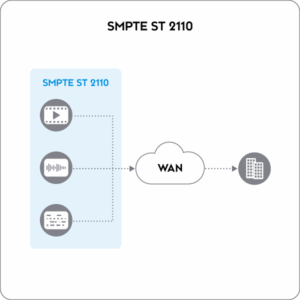
SMPTE ST 2110 enables IP-based transport of video, audio, and data as separate, synchronized streams for flexible and efficient media workflows.

What is SMPTE ST 2110?

SMPTE ST 2110 is a suite of standards developed by the Society of Motion Picture and Television Engineers (SMPTE) for the carriage, synchronization, and description of separate professional video, audio, and data streams over managed IP networks. By transmitting video, audio, and ancillary data as separate yet synchronized streams, ST 2110 enhances flexibility, scalability, and efficiency in modern broadcast and production workflows.

Traditional SDI-based workflows rely on point-to-point connections, whereas SMPTE ST 2110 leverages IP networks to facilitate remote production and virtualized infrastructure. Extending ST 2110 into cloud environments is possible but typically requires gateways or software-based implementations, since native multicast distribution and PTP timing are more challenging to maintain over wide-area or cloud networks.

SMPTE ST 2110: Meaning

SMPTE ST 2110 is a standardized framework for transporting professional media over IP, designed to streamline the management and routing of media components. By handling video, audio, and metadata as independent streams, ST 2110 eliminates the constraints of dedicated physical interfaces while supporting both uncompressed video and, via ST 2110-22, constant bit-rate compressed video, with frame-accurate synchronization for high-end production environments.

Key Differences: SMPTE ST 2110 vs. Other Technologies

  • SDI vs. ST 2110: SDI uses coaxial cables for point-to-point connections, whereas ST 2110 enables scalable, network-based media transport.
  • SMPTE 2022-6 vs. ST 2110: SMPTE 2022-6 encapsulates SDI signals over IP, while ST 2110 transmits separate streams for video, audio, and data, providing greater workflow adaptability.
  • ST 2110 vs. NDI: NDI is optimized for compressed video in smaller environments, whereas ST 2110 is designed primarily for uncompressed workflows in large-scale professional environments, though ST 2110-22 also supports constant bit-rate compressed formats such as JPEG XS.

How Nevion Utilizes SMPTE ST 2110

Nevion integrates SMPTE ST 2110 into its solutions to enable seamless IP workflows for broadcasters and production facilities. This standard underpins Nevion’s advanced technologies, ensuring high-quality media transport with precise synchronization.

Nevion’s SMPTE ST 2110-enabled solutions support:

  • Remote Production: Enabling live event coverage with synchronized multi-location streams.
  • Networked Media Production: Delivering uncompressed, high-quality content over shared IP networks.
  • Virtualized Media Solutions: Providing flexible and scalable workflows through cloud-based infrastructure, including MOXELA, which is designed to support standards-based workflows, including SMPTE ST 2110.

SMPTE ST 2110 and Network Bandwidth

SMPTE ST 2110 requires substantial network bandwidth to handle uncompressed media streams efficiently. Depending on resolution, frame rate, and color depth, a single uncompressed 1080p60 video stream can demand over 3 Gbps.

To accommodate this, broadcasters deploy high-capacity networks based on 10 GbE or higher, together with traffic management strategies such as multicast control and QoS prioritisation. Precision Time Protocol (PTP) separately provides the timing reference required for frame-accurate synchronisation across ST 2110 devices.

Hardware Requirements for SMPTE ST 2110

Implementing SMPTE ST 2110 necessitates specialized hardware and network infrastructure, including:

  • IP-enabled Video Equipment: Cameras, switchers, and playout servers supporting ST 2110 standards.
  • High-Performance Network Switches: Supporting multicast traffic and PTP-aware forwarding (e.g., as boundary or transparent clocks) to maintain accurate synchronisation. 
  • PTP Grandmaster Clocks: Ensuring precise timing across connected devices.
  • Media Gateways: Bridging SDI-based systems with ST 2110 workflows.
  • Monitoring & Analysis Tools: Ensuring network reliability and media signal integrity.

As media operations scale, additional investments in cloud-compatible and virtualized infrastructure enhance flexibility and efficiency in dynamic production environments.

Learn More

Explore Nevion’s solutions and whitepapers to gain deeper insights into SMPTE ST 2110 and how it is shaping the future of broadcast and media production.


Further Reading

Nevion MOXELA — Software-based Media Processing Platform