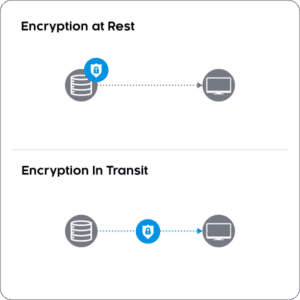
Encryption at Rest and In Transit refers to two complementary security practices used to protect data throughout its lifecycle. Encryption at rest safeguards data stored on disks, databases, or backups, ensuring it cannot be read if systems are compromised or stolen. Encryption in transit protects data as it moves across IP networks, preventing interception, eavesdropping, or tampering. Together, they form a fundamental pillar of modern cybersecurity strategies for IP-based and software-defined systems.
What Nevion Does
Nevion applies encryption at rest and in transit to protect sensitive data within software-defined media networks. In solutions such as VideoIPath, encryption mechanisms are used to secure configuration data, credentials, and management communications. Secure protocols like TLS protect data in transit between distributed components, while stored system data is safeguarded to reduce exposure in case of unauthorized access.
Additionally, Nevion Virtuoso provides encryption in conjunction with IP transport protection for media and data. Its IP Media Edge (IPME) function acts as a trust boundary with network isolation, media firewall, network stream protection, NAT, FEC, and SMPTE ST 2022-7 for protected RTP/IP media flows. Virtuoso also supports SRT (Secure Reliable Transport), further ensuring the secure and reliable transport of media and data across IP networks.
Benefits & Advantages of Encryption at Rest / In Transit
- Protects sensitive data across its entire lifecycle
- Reduces risk from unauthorized access or data breaches
- Supports compliance with cybersecurity standards and regulations
- Strengthens security in distributed and IP-based environments
Common Questions
Q: Is encryption at rest enough on its own?
A: No, data must also be protected while in transit.
Q: Does encryption impact performance?
A: The impact is minimal with modern systems.
Q: Is encryption relevant for broadcast systems?
A: Yes, especially for IP and software-driven workflows.
Further Reading