What is Live Event Production?

live event production

Learn how live event production combines creativity and technology to deliver real-time experiences. Explore how Nevion’s IP-based and cloud-native solutions are revolutionizing how live events are captured, managed, and broadcast globally.

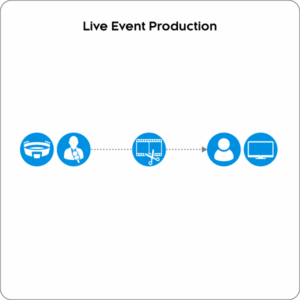
Live event production is the process of capturing, producing, and delivering an event to audiences as it happens, using audio, video, broadcast, and networking technologies.

Live event production covers the technical and creative processes required to deliver events in real time. These can include sports, concerts, conferences, festivals, corporate events, and other large-scale broadcasts.

Unlike pre-recorded production, live production requires real-time decision-making, reliable media transport, and precise coordination between production teams and technology. Audio, video, graphics, communications, and media networks must work together to deliver the experience to audiences on-site and remotely.

The adoption of IP-based media networks, remote production, software-defined processing, and cloud technologieshas transformed live event production, allowing production resources and teams to be distributed across different locations.


What Nevion Does

Nevion provides technologies for transporting, processing, and orchestrating media in live and distributed production environments.

  • Remote and Distributed Production: Nevion Virtuoso enables real-time media transport and processing between venues, production facilities, and remote locations, supporting live production over local and wide-area IP networks.
  • Software-Defined Media Processing: Virtuoso provides software-defined media functions including encoding and decoding, IP adaptation, format conversion, monitoring, and other real-time processing capabilities required in live workflows.
  • Modular Live Media Processing: MOXELA provides infrastructure-independent, software-based processing for live production and contribution. Its modular media functions can be combined into low-latency applications for video, audio, and data processing, running on COTS infrastructure or in private and public cloud environments.
  • Media Orchestration: VideoIPath provides orchestration and control of connectivity, media flows, devices, and processing resources across on-premises, WAN, remote, and cloud environments.

Together, these technologies enable broadcasters and media organizations to build flexible, distributed, and software-defined live production workflows.

Benefits of Live Event Production

  • Global Reach: Live content can be delivered to audiences around the world in real time.
  • Production Flexibility: IP and software-defined workflows allow production resources to be distributed and shared across locations.
  • Cost Efficiency: Remote production can reduce the amount of equipment and personnel required at event venues.
  • Scalability: Production resources can be adapted to events of different sizes and requirements.
  • Reliability: Redundancy and network-protection mechanisms can help maintain media transport during network failures or impairments.
  • Sustainability: Remote production can reduce travel and the amount of equipment transported between locations.


Live, Remote, and Pre-recorded Production

Production TypeDescriptionExample Use Case
Live ProductionContent is captured and produced in real time.Sports event, concert.
Remote Production (REMI)A live production where some or all production personnel and resources are located away from the event venueSports production controlled from a central facility
Pre-recorded ProductionContent is captured before distribution and can be edited before releaseTV program, documentary

Common Questions

Q: What is the difference between live and remote production?
A: Live production describes content that is produced as the event happens. Remote production is a type of live productionin which some or all production personnel and resources are located away from the event venue.

Q: How do IP networks support live event production?
A: IP networks enable flexible media routing and allow high-quality video, audio, and data to be transported between venues, production facilities, remote teams, and cloud environments.

Q: Can live events be produced using the cloud?
A: Yes. Cloud and hybrid production environments can provide processing and production resources that complement or replace parts of traditional on-premises infrastructure.

Q: How can media transport be protected during live production?
A: Depending on the network and application, technologies such as SMPTE ST 2022-7, Forward Error Correction (FEC), and retransmission mechanisms such as ARQ can be used to protect live media streams against network impairments.

Further Information