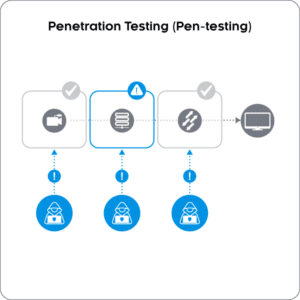
Penetration Testing, commonly known as pentesting, is a controlled cybersecurity assessment in which security specialists simulate real-world cyberattacks to identify vulnerabilities in systems, applications, and networks. By actively exploiting weaknesses such as misconfigurations, insecure interfaces, or insufficient access controls Pen-testing helps organizations understand their true security posture and validate the effectiveness of existing defenses before attackers do.
What Nevion Does
Nevion incorporates Penetration Testing as part of its secure development and validation processes for software-defined media solutions. Pen-testing is used to assess critical components such as APIs, orchestration layers, and management interfaces in platforms like VideoIPath, and Virtuoso, ensuring that IP-based broadcast infrastructures are robust against unauthorized access and malicious activity.
This approach is further supported by tools and platforms such as MOXELA, which contribute to security validation and testing workflows within the broader development and deployment lifecycle.
Benefits & Advantages of Penetration Testing
- Identifies exploitable vulnerabilities before they are abused
- Validates the effectiveness of security controls
- Reduces operational and reputational risk
- Supports compliance with cybersecurity frameworks and regulations
Common Questions
Q: How is Pen-testing different from vulnerability scanning?
A: Pen-testing actively exploits weaknesses; scanning only detects them.
Q: Is Pen-testing disruptive?
A: When properly planned, it is safe and controlled.
Q: How often should Pen-testing be performed?
A: Regularly, especially after major system changes.
Further Reading
- Nevion VideoIPath — Media Orchestration Platform
- Nevion Virtuoso — Software-defined Media Node
- Nevion MOXELA — Software-based Media Processing Platform