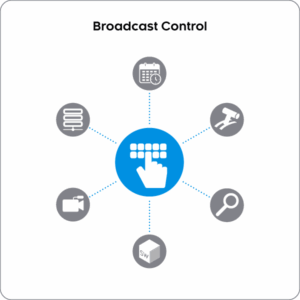
Broadcast control is the management of media devices, signals, and workflows to ensure reliable, efficient, and synchronized broadcast operations.
Broadcast control refers to the systems and processes used to configure, monitor, and manage professional broadcast environments. It encompasses everything from routing video and audio signals to scheduling content playout, managing device status, and ensuring operational consistency across a broadcast chain.
Traditionally, broadcast control was implemented through dedicated hardware controllers and proprietary interfaces. Today, the shift toward IP-based infrastructures and software-defined solutions has transformed broadcast control into a highly flexible, centralized, and automated process. Broadcasters now use orchestration platforms and standardized APIs (such as NMOS) to dynamically manage their media workflows, whether in a single studio or across distributed production facilities.
What Nevion Does
Nevion provides advanced broadcast control capabilities through its orchestration and software-defined solutions:
- VideoIPath Orchestration Platform: Nevion’s flagship orchestration system enables centralized broadcast control of IP-based media networks. It integrates routing, connection management, and resource allocation, combining NMOS standards (IS-04/IS-05) with SDN control for hybrid multi-vendor environments.
- Device & Signal Management: With VideoIPath, broadcasters can register, monitor, and control thousands of devices across studios, data centers, and cloud-based production hubs.
- Interoperability: Nevion ensures broadcast control works seamlessly across different vendors by supporting open standards (SMPTE ST 2110, NMOS) alongside device-specific drivers.
- Resilience: Nevion incorporates features like hitless switching (ST 2022-7) and automated failover, ensuring continuous broadcast operation even in case of equipment or link failures.