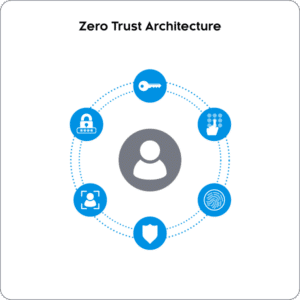
Zero Trust Architecture (ZTA) is a cybersecurity model based on the principle “never trust, always verify.” Instead of assuming that users or systems inside a network are trustworthy, Zero Trust requires continuous authentication, authorization, and validation for every access request regardless of location. This approach is especially relevant for IP-based, cloud-enabled, and distributed environments, where traditional perimeter-based security models are no longer sufficient.
What Nevion Does
Nevion applies Zero Trust principles when designing software-defined media networks for live production and broadcast operations. In platforms such as VideoIPath, access to control, management, and orchestration layers is tightly regulated through identity-based access control, secure communication channels, and system segmentation. This ensures that only authorized users and services can interact with critical broadcast infrastructure, even within trusted networks.
Benefits & Advantages of Zero Trust Architecture
- Reduces the attack surface of complex IP systems
- Prevents lateral movement within networks
- Improves protection of mission-critical workflows
- Aligns with modern cybersecurity frameworks and regulations
Common Questions
Q: Is Zero Trust a product or a framework?
A: It is a security architecture and design approach.
Q: Does Zero Trust replace firewalls?
A: No, it complements existing security controls.
Q: Is Zero Trust suitable for broadcast environments?
A: Yes, particularly for IP remote and distributed production.