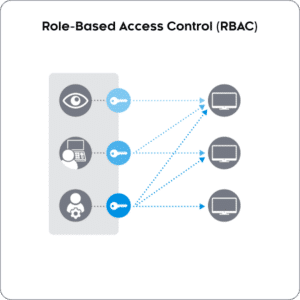
Role-Based Access Control (RBAC) is a security model that restricts system access based on predefined user roles. Instead of assigning permissions to individuals, RBAC assigns permissions to roles, such as administrator, operator, or viewer, and users inherit access rights according to their responsibilities. This structured approach simplifies access management, reduces human error, and strengthens security in complex, IP-based environments.
What Nevion Does
Nevion implements RBAC within its software-defined media solutions to ensure secure and controlled access to broadcast infrastructure. In platforms such as VideoIPath and Virtuoso, user roles define what actions can be performed, such as routing signals, configuring network paths, or modifying system settings. This ensures that operational staff, engineers, and administrators have appropriate, clearly defined permissions aligned with organizational policies.
RBAC support will also be extended to MOXELA, bringing the same structured, role-based access model to Nevion’s cloud-native media processing platform.
Benefits & Advantages of RBAC
- Simplifies user and permission management
- Reduces risk of unauthorized or accidental changes
- Improves auditability and accountability
- Supports compliance with cybersecurity frameworks
Comparison: RBAC vs. Individual Access Control
| Feature | RBAC | Individual Permissions |
| Scalability | High | Limited |
| Administrative effort | Low | High |
| Risk of misconfiguration | Reduced | Increased |
| Policy consistency | Strong | Variable |
Common Questions
Q: Is RBAC suitable for broadcast systems?
A: Yes, especially in software-defined and IP-based workflows.
Q: Can RBAC support granular permissions?
A: Yes, roles can be highly detailed.
Q: Does RBAC replace authentication?
A: No, authentication verifies identity before RBAC applies permissions.
Further Reading
- Nevion VideoIPath — Media Orchestration Platform
- Nevion Virtuoso — Software-defined Media Node
- Nevion MOXELA — Software-based Media Processing Platform